
For Clinicians

FOR CLINICIANS

Resources rooted inthe work of therapy.

Created by experienced marriage and family therapists and counselors, our workbooks support psychoeducation, reflection, and skills practice—in session and beyond. A relational and multicultural perspective informs every resource.

Grounded in clinical experience.
Created for meaningful conversations.
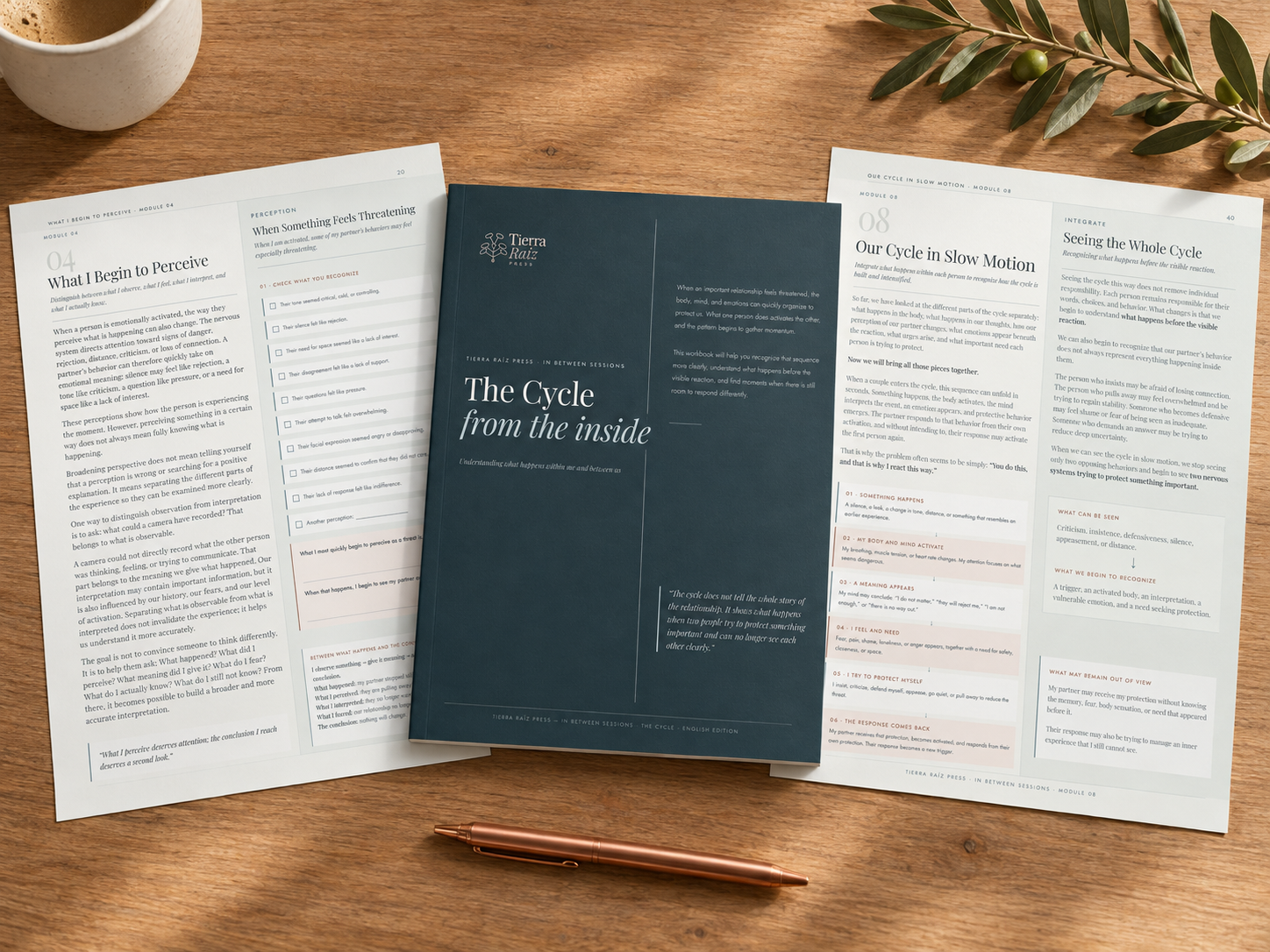
Tierra Raíz workbook pages prepared for therapeutic reflection

For clinical practice

Designed to support the work—not direct it.

Tierra Raíz workbooks are developed through research, writing, design, and input from clinicians in different fields. They offer readers language, structure, and practices they can return to at their own pace.

01

Psychoeducation

Introduce complex ideas in language clients can understand without flattening or oversimplifying their experience.

Browse resources
02

Between-session reflection

Help clients notice patterns, prepare for discussion, and continue the work with greater intention.

Explore workbooks
03

Skills practice

Translate insight into paced, repeatable practices for regulation, communication, and self-observation.

View practical tools
04

Bilingual continuity

Support clients who think, feel, or communicate across English and Spanish with resources conceived for both languages.

View bilingual titles

THE PERSPECTIVE BEHIND EACH PAGE

Rooted in the real work of therapy.

Tierra Raíz grew from the experience of sitting with people in the therapy room—listening to their stories, witnessing their efforts, and learning how differently healing can unfold.

Each workbook is developed from clinical practice and informed by the perspectives of professionals across different disciplines. Their questions, observations, and areas of experience help turn therapeutic ideas into resources that are clear, compassionate, and useful.

Collaboration is part of the editorial process. These professionals are not presented as named authors; their input is integrated with the same commitment to rigor, care, and respect for the reader’s experience.

CLINICAL FOUNDATIONS

Perspectives that help organize the work.

The collection includes resources informed by Emotionally Focused Therapy (EFT) and EMDR. Each workbook identifies its relevant foundations so you can consider how it fits your practice.

01

Attachment and systems

Attention to connection, relational patterns, and the family contexts that shape experience.

02

Body and regulation

Paced practices that help readers notice body responses, expand choice, and return to greater stability.

03

Meaning and action

Room to understand patterns, clarify needs, and practice actions that reflect the reader’s values.

A MULTICULTURAL PERSPECTIVE

Culture belongs in the conversation about healing.

Our approach makes room for language, identity, migration, family expectations, community, spirituality, and belonging.

We work from curiosity and cultural humility, recognizing that people within the same community can hold very different experiences, responsibilities, and values.

EDITORIAL PROCESS

How each resource is developed and reviewed.

The process brings clinical knowledge, accessible writing, cultural reflection, and editorial design together.

01

Define the purpose

Clarify the audience, therapeutic focus, and boundaries of the resource.

02

Develop the content

Translate relevant concepts into clear teaching, reflection prompts, and practical exercises.

03

Review the clinical content

Examine accuracy, pacing, language, and responsible use of the material.

04

Review culture and accessibility

Consider assumptions, examples, readability, and room for different lived experiences.

05

Refine the final resource

Review instructions, sequence, design, and references before publication.

IN PRACTICE

Bring the pages into the conversation with intention.

Choose material according to the client’s goals, readiness, language, and preferences.

Ways to use a page

  • Introduce a concept through accessible psychoeducation.
  • Support reflection during a session.
  • Offer an optional practice between appointments.
  • Return to an insight or skill when it becomes relevant again.

Before recommending a workbook

Preview it with the client, explain why you are suggesting it, and agree on a manageable place to begin. Consider language, reading preferences, accessibility, cost, and interest in written materials.

You can work through a page together, invite a verbal response, or return to an exercise when it better fits the process.

PREVIEW BEFORE YOU RECOMMEND

Find resources that support the work you are already doing.

Explore the workbooks, interior pages, available language, and purpose of each title.

Detailed workbook pages from Tierra Raíz Press

Use with care

Clinical judgment remains the frame.

Review the material before assigning it. Consider the client’s goals, readiness, culture, language, literacy, and current stability. Adjust pacing, pause exercises, or use selected pages when that is the better fit.

Responsible use: these resources are not treatment protocols and do not replace assessment, individualized treatment planning, crisis support, or professional care.

TIERRA RAÍZ PRESS

Selected pages from our collection

Selected page preview